
Why Section 106 Matters
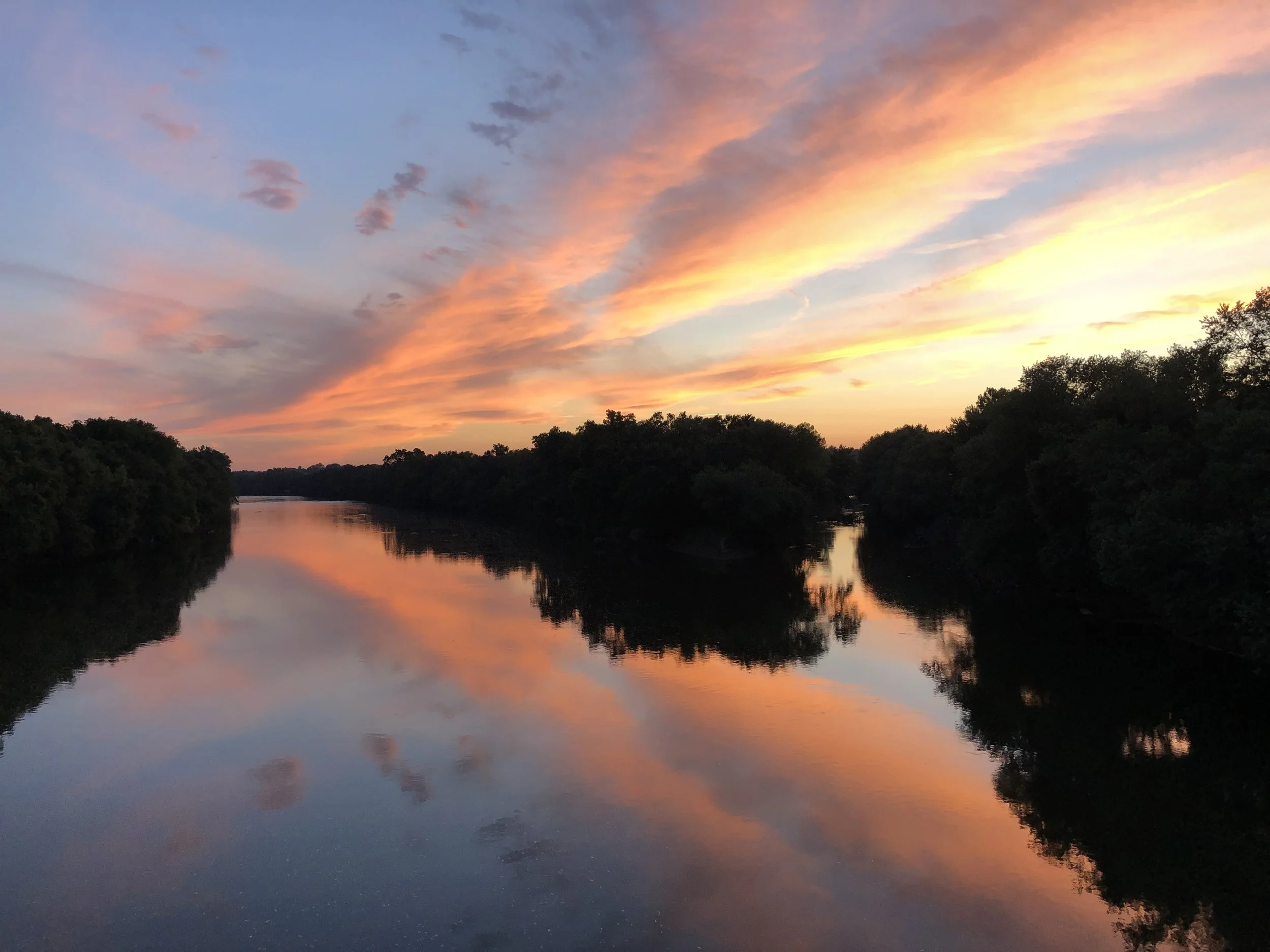
“Were it not for Section 106, our ancient capital of Rassawek would be gone,” Chief Diane Shields of the Monacan Indian Nation to The Washington Post. Photo of Rassawek by Greg Werkheiser.
For 60 years, Section 106 of the National Historic Preservation Act has required the federal government to look before it harms. When a federal agency carries out, funds, permits, licenses, or approves a project, Section 106 requires it to identify historic and culturally significant places, understand how the project could affect them, listen to Tribal Nations and affected communities, and consider ways to avoid or reduce harm before making a final decision.
Section 106 protects far more than famous landmarks. It gives people a voice when federal decisions threaten Tribal sacred places, burial grounds, archaeological sites, historic neighborhoods, battlefields, Main Streets, cultural landscapes, houses of worship, and other places that hold our shared and individual histories. It does not prevent America from building. It helps us build with the knowledge, care, and democratic accountability necessary to avoid irreversible mistakes.
Frequently Asked Questions
-
Section 106 requires a federal agency to determine whether its undertaking (a development project it is pursuing, funding, or permitting a private developer to pursue) could affect historic properties; identify the places that may be affected; consult Tribal Nations, State and Tribal Historic Preservation Officers, local governments, organizations, and other affected parties; invite public participation; and consider ways to avoid, minimize, or mitigate harm. The process must occur while alternatives remain available—not after the agency has already made an irreversible decision.
-
No. Section 106 is a process for informed decision-making, not a preservation veto. It does not automatically prohibit demolition, development, energy production, transportation projects, or other federal actions. The federal agency ordinarily retains authority to proceed after it has considered the consequences and worked with consulting parties to identify ways to avoid or mitigate harm to historic resources. Under the current regulations, when a project would harm a historic property, the agency must consult with the State or Tribal Historic Preservation Officer, Tribal Nations, and other consulting parties to seek ways to avoid, minimize, or mitigate that harm. The agency is not required to adopt any particular outcome. Section 106 makes government listen before it acts.
-
The evidence says no. A nationwide survey of 40 State Historic Preservation Offices covering more than 94,000 submissions found an average response time of 16 days. Nearly 95 percent of the offices completed their reviews within the regulatory period, and nearly 80 percent averaged 21 days or fewer. In Georgia, the state office reviewed 16,552 projects between 2021 and 2025 in an average of 21 days; approximately 87 percent required no protective measures, and only 2.3 percent required more extensive consultation.
When reviews are lengthy, the common causes include incomplete project information, agencies beginning consultation too late, fragmented records, and insufficient staffing. Those problems can—and should—be fixed without silencing the people Section 106 was created to protect.
-
No. Preservation creates jobs, attracts investment, supports small businesses, strengthens communities, and makes productive use of existing buildings and infrastructure. The federal Historic Tax Credit has helped rehabilitate more than 50,000 buildings, generated more than $235 billion in private investment, and supported approximately 3.2 million jobs. Thirty-eight states have created their own historic tax credits because reuse and preservation are proven economic-development tools.
-
No. Litigation under the National Historic Preservation Act is extraordinarily rare. Researchers examined all 13 million federal lawsuits of any type filed in the last 35 years and found only 266 reported cases that involved a claim under NHPA. And in most of those cases, the NHPA claim was a secondary claim. That’s fewer than 8 cases per year nationwide, or .0064% of cases overall. You are as likely to be struck by lightning as you are to be a defendant in the 106 case. Effective early consultation, the aim of Section 106, is more likely to prevent conflict and litigation than to create it.
-
Federal agencies cannot identify every sacred place, burial ground, traditional cultural property, or archaeological site from a government database. Tribal Nations often hold knowledge that does not appear in federal or state records—and some of that knowledge is sensitive or confidential. Meaningful government-to-government consultation allows agencies to understand what is at risk before a route, permit, or construction decision causes permanent harm. Consultation is not simply an invitation to submit information; it requires agencies to listen, engage, and consider what Tribal Nations tell them.
-
No. Section 106 applies to properties that are listed in—or eligible for—the National Register of Historic Places. That distinction matters because many significant places, particularly Tribal cultural sites, archaeological resources, rural landscapes, and places associated with historically excluded communities, have never been formally surveyed or listed. We cannot protect what an agency never takes the time to find.
-
Under the Trump administration, Section 106 is being threatened from three directions at one: proposed gutting of the federal regulations that govern how it works advance by the Advisory Council on Historic Preservation; Congressional efforts to weaken the law itself under pressure from big energy extraction companies; efforts by the President and federal agencies to evade the law as applied to pet projects. Together these will eliminate public notice, stifle Tribal and community voices, exclude important places and harms from consideration, impose unworkable deadlines, and constrain judicial review and remedies.
What the Future Could Look Like
Section 106 does not slow America down. Most reviews are completed promptly and without controversy. When federal decisions stall, the recurring causes are elsewhere: agencies begin consultation after key choices have already been made; federal offices lack sufficient staff, expertise, and resources—problems made worse by recent cuts; and project proponents submit incomplete information or resist the transparency necessary for informed review.
The answer is not to weaken a system that works. It is to correct those preventable failures by rebuilding federal capacity, requiring early and complete project information, beginning consultation while alternatives remain available, improving digital records, and expanding proven coordination tools. Those investments would preserve the notice, consultation, and accountability that make Section 106 effective while making the entire federal decision-making process more efficient, predictable, informed, and trusted.
Earlier identification of risk. Agencies would examine historic and cultural concerns while routes, locations, and designs can still change—not after a preferred alternative has effectively been selected.
Meaningful Tribal consultation. Government-to-government consultation would begin before consequential decisions are made, respect Tribal knowledge and sovereignty, and provide Tribal Historic Preservation Offices with the resources necessary to participate fully.
Adequate staffing and expertise. Federal agencies, State Historic Preservation Offices, Tribal Historic Preservation Offices, and local partners would have enough trained people to review projects promptly and resolve difficult questions before they become crises.
Modern and secure information systems. Compatible digital inventories, better mapping, accessible public records, and strong safeguards for confidential Tribal information would reduce duplication, uncertainty, and avoidable delay.
Complete information at the beginning. Project sponsors and federal agencies would provide usable plans, maps, alternatives, and supporting information when consultation begins rather than forcing reviewers and communities to spend weeks seeking basic facts.
Predictable pathways for routine projects. Proven programmatic agreements, standard treatments, and coordinated reviews would allow common and low-risk undertakings to move efficiently while concentrating attention on projects that present serious or irreversible risks.
Better dispute resolution. Skilled facilitation and clear escalation procedures would help agencies, project sponsors, Tribal Nations, and communities resolve disagreements before positions harden and litigation becomes necessary.
Accountability before destruction. Agencies would report meaningful performance data, the public would receive timely notice, and courts would retain effective remedies capable of stopping unlawful action before an irreplaceable place is lost.

A Section 106 Success Story: the adaptive reuse of the Presidio, San Francisco, CA, from a expensive-to- maintain military base to a financially self-sustaining national park site. Photo by Greg Werkheiser.
This is the future the Coalition is working toward:
A federal decision-making system in which agencies have the capacity to begin Section 106 early, project proponents provide complete and transparent information, Tribal Nations and communities are heard while choices can still change, and a proven process is allowed to work as Congress intended—so America can build efficiently without needlessly destroying the places that make it America.