
RESOURCES
This Resource Bank brings together practical tools, trusted guidance, model comments, research, presentations, and training materials for anyone working to defend and strengthen Section 106.
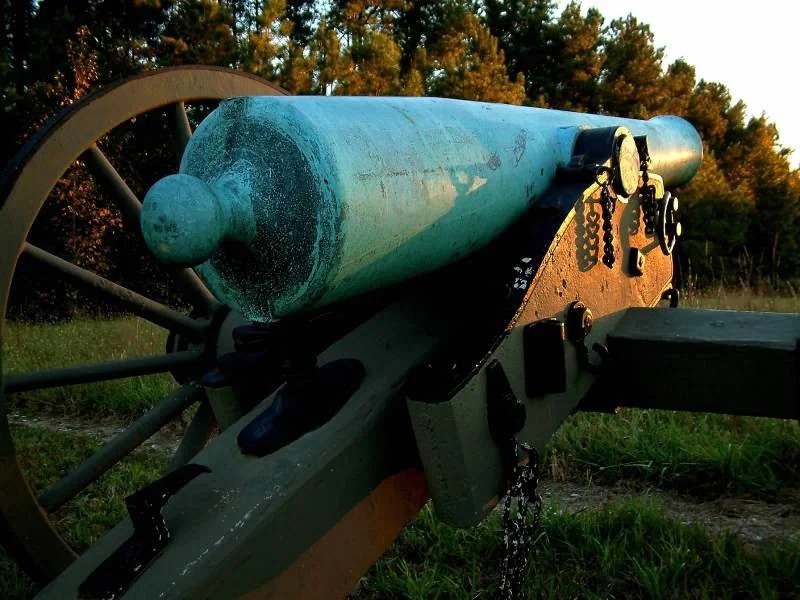
Cannon at a historic Civil War battlefield that would be vulnerable to harm from developers under a weakened Section 106. Photo by John Rooney.
Whether you are learning how the process works, briefing elected officials, preparing regulatory comments, organizing your community, or documenting a Section 106 success story, these materials are here to help.
This is a shared and growing collection. The Coalition welcomes additional data, case studies, comment letters, communications tools, and examples showing how Section 106 has protected important places, improved projects, prevented conflict, or helped communities participate in federal decisions.
Understanding Section 106 and The Current Threats
-
The Advisory Council on Historic Preservation’s plain-language guide explains when Section 106 applies, currently how the review process works, how members of the public can participate, and what to do when an agency fails to follow the rules.
-
Cultural Heritage Partners’ recorded presentation to preservation leaders explaining the proposed regulatory changes, their likely consequences, and the emerging national response. (This still serves as an effective introduction, but we note that it took place shortly after ACHP’s regulations were revealed and much has happened since.)
-
Cultural Heritage Partners’ briefing for the National Association of Tribal Historic Preservation Officers examining the proposed rewrite and its implications for Tribal Nations, Tribal Historic Preservation Officers, and government-to-government consultation.
-
Cultural Heritage Partners’ presentation to the National Parks Conservation Association coalition explaining the proposed changes and their consequences.
-
Culture Keepers’ strategy session addressing the proposed Section 106 rewrite and opportunities for coordinated action.
-
This Women in Archaeology podcast examines the proposed overhaul of the Section 106 regulations, what the changes could mean in practice, and why archaeologists and communities are concerned.
-
The Association for Washington Archaeology explains how the proposed changes could affect historic properties, archaeological resources, Tribal interests, public participation, and the integrity of federal review.
-
The National Trust for Historic Preservation provides an introduction to federal permitting reform, how proposals move through Congress, and where historic preservation laws fit into the larger debate.
-
The National Conference of State Historic Preservation Officers explains the proposed regulatory rewrite, the steps that follow, and what State Historic Preservation Offices and other participants should watch.
-
The National Alliance of Preservation Commissions explains why local preservation commissions should participate in Section 106 review and how local knowledge can improve federal decision-making.
Communications Guidance & Tools
-
Cultural Heritage Partners’ presentation on communicating the value of Section 106, responding to misinformation, identifying persuasive messengers, and turning technical threats into stories that people understand.
-
Cultural Heritage Partners’ adaptable scripts for contacting members of Congress and explaining why Section 106, Tribal consultation, public participation, and meaningful federal accountability must be protected.
-
Cultural Heritage Partners’ concise set of messages for conversations with elected officials, journalists, organizational leaders, colleagues, and members of the public.
-
A customizable Canva template for sharing Section 106 stories and campaign messages. Suggested hashtags include #SaveSec106, #ProtectOurHeritage, and #ThisPlaceMatters.
-
A customizable Canva template for showing how Section 106 has protected a place, improved a project, or helped a community’s voice change the outcome.
-
The National Alliance of Preservation Commissions is collecting examples of Section 106 working as intended. Share a project in which consultation identified an important place, improved a proposal, avoided damage, or produced a better result.
Guide to Submitting Comments & Samples
-
We urge you all to begin the process of drafting comment letters for the proposed regulatory rewrite now to make your voice heard and your comment count. You can do this by focusing on 8 key points:
Answer ACHP’s Numbered Questions: Cite the specific question number from the NPRM you’re responding to.
Lead With Evidence: Real projects, data, costs, and delays outweigh opinions in the record.
Cite the Exact Provision: Reference the specific section — e.g., § 800.16(k)(2) — not the rule in general.
Propose Alternative Text: Don’t just object — suggest the specific fix you want to see adopted.
State Who You Are: Tribes, SHPOs, CRM firms, and local governments each carry distinct weight.
Preserve Issues for Litigation: Courts generally only review arguments raised during the comment period.
Keep It Organized & Concise: Executive summary, section headers, one clear ask per point.
Nail the Mechanics: 30-day deadline; submit via regulations.gov with the docket/RIN number. We will let you know when the comment period has started and how to submit when it is time.
-
Governing for Impact’s guide explains how to draft effective regulatory comments that build an evidentiary record, answer an agency’s questions, identify legal and practical problems, and propose workable alternatives.
-
These letters offer examples of how organizations and individuals have explained the legal, practical, professional, cultural, and community consequences of weakening Section 106. They can help commenters identify issues and develop their own evidence and recommendations. Comments should reflect the submitter’s own experience and voice rather than simply reproduce another organization’s language.
Cultural Heritage Partners Letter to the Advisory Council on Historic Preservation
N. Konkol Letter to the Advisory Council on Historic Preservation
The Culture Keepers Circle Letter to the Advisory Council on HistoricPreservation
Latinos in Heritage Conservation Opposition to the Proposed Rewrite of 36 C.F.R. Part 800
Cultural Resources Analysts Letter to Governor Andy Beshear
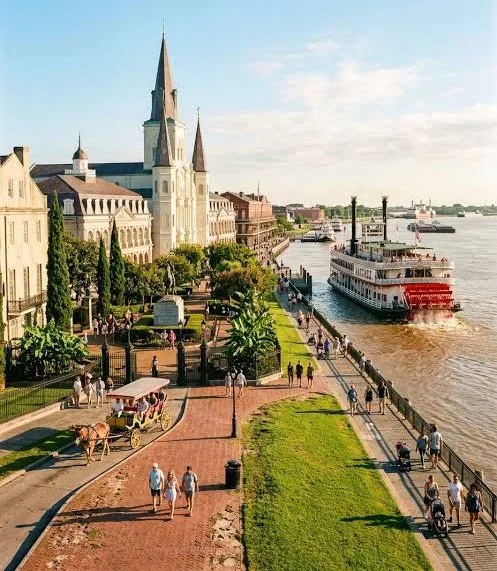
French Quarter, New Orleans: Among Section 106's first major victories was giving the public a voice to oppose the construction of an elevated 6-lane expressway between the French Quarter and the river. In 1969, the Federal Highway Administration reversed its decision on the proposal.
data room
-
THE CASE FOR WEAKENING SECTION 106 COLLAPSES UNDER SCRUTINY
Those who would weaken Section 106 justify their efforts with three specious claims:
Section 106 consultation delays projects;
The process generates too much litigation; and
Historic preservation stands in the way of economic growth.
The evidence tells a very different story.
MYTH #1: Section 106 Routinely Delays Projects
Reality: The overwhelming majority of projects move through Section 106 quickly, and very few require extensive review.
A nationwide survey completed by 40 State Historic Preservation Offices (SHPOs) found that while processing more than 94,000 Section 106 projects in a single year, they completed reviews in an average of just 16 days. That is roughly half the 30-day review period provided under the regulations.
Nearly 95 percent of the SHPOs reported average review times within the regulatory timeframe, and nearly 80 percent averaged 21 days or less.
This same survey demonstrated that just as importantly, the overwhelming majority of projects proceed without significant preservation concerns.
97 percent of new undertakings did not result in an adverse effect determination. In other words, only about three out of every one hundred projects required the more intensive consultation that Section 106 is specifically designed to provide when nationally significant historic resources may be affected.
That is not the profile of a permitting system in crisis. And it is not evidence that justifies stripping away public, Tribal, state, and local rights in the name of speed. It is the profile of an efficient screening process that quickly clears the great majority of projects while devoting additional attention only where America’s irreplaceable historic resources are genuinely at risk.
Critics point only to the most complicated projects involving multiple states and eminent domain conflicts as “proof” for why Section 106 needs reform.
Bottom Line: Section 106 is not a bottleneck. It is a highly efficient screening system.
*****************************
MYTH #2: Section 106 is a Litigation Risk for Project Proponents
Reality: Section 106 litigation is extraordinarily rare.
Industry advocates frequently cite litigation as a reason to weaken Section 106. The numbers prove this false.
Our coalition reviewed federal court filings nationwide and identified only 266 cases in the last 35 years asserting claims under the NHPA. During that same period, millions of federal undertakings underwent Section 106 review.
Today, on average more than 120,000 federal undertakings are reviewed under Section 106 each year. Yet over the past 35 years, federal courts have seen an average of only 7.6 cases per year asserting any NHPA claim at all. For perspective, that annual figure is equivalent to just 0.0063 percent of the number of undertakings now undergoing Section 106 review.
For the overwhelming majority of project sponsors, becoming involved in a Section 106 lawsuit is not a meaningful business risk. Indeed, the odds are slightly less than being struck by lightning during your lifetime (0.0065%).
Even that comparison overstates Section 106’s role. In 82% of cases, an NHPA claim is simply one claim among many. The litigation usually concerns much broader disputes involving land seizure by eminent domain, administrative procedure, treaty rights, endangered species, or constitutional issues.
In FY2025, 303,563 cases were filed in federal district courts. Only one in every 40,400 (0.0025%) cases filed at the federal level involved an NHPA claim.
Bottom Line: Section 106 litigation is the rare exception—not the rule. Citing litigation risk as a cause for statutory reform is indefensible.
*****************************
MYTH #3: Historic Preservation Is an Economic Drag
Reality: America’s historic places and resources are among our most productive economic assets.
Perhaps the most persistent misconception is that preservation and prosperity exist in tension. The opposite is true. Historic preservation is one of America’s most successful economic development strategies.
Decades of research demonstrate that preservation generates jobs, attracts investment, revitalizes communities, and strengthens local tax bases. Nationwide analyses of the Federal Historic Tax Credit, conducted by Rutgers University for the National Park Service, show that historic rehabilitation has leveraged more than $235 billion in private investment, supported over 3.2 million American jobs, and helped rehabilitate more than 50,000 historic buildings across the United States.
Historic rehabilitation consistently generates more tax revenue than the value of the tax credits provided while creating high-quality, locally rooted jobs requiring specialized American craftsmanship that cannot be outsourced. Those benefits extend well beyond rehabilitation projects. Historic places anchor thriving downtowns and Main Streets, attract entrepreneurs, and encourage adaptive reuse rather than demolition. They increase nearby property values and sustain locally owned businesses. They give communities the distinct identity that attracts employers, residents, and investment. Recognizing those economic returns, 38 states have adopted their own historic tax credit programs.
Heritage tourism tells the same story. A recent analysis found that heritage tourism generated more than $607 billion in travel spending worldwide in 2024 and is projected to exceed $900 billion within the next decade. In the United States alone, museums contribute approximately $50 billion annually to the national economy while supporting more than 726,000 jobs.
Historic places are not merely cultural assets. They are economic infrastructure.
Bottom Line: The question is not whether America can afford to preserve its historic places. It is whether America can afford to lose the jobs, investment, tax revenue, tourism, and community identity they generate.
Read More
-
A one-page data summary showing how Section 106 review works in practice. Between 2021 and 2025, Georgia reviewed 16,552 projects in an average of 21 days; approximately 87 percent required no protective measures, and only 2.3 percent required more extensive consultation.
Help Build the Resource Bank
Do you have useful data, a successful project example, a model comment letter, a local story, a training resource, or an advocacy tool that others could use? Share it with the Coalition so we can learn from one another and make the national case for a stronger Section 106.